
Chemo Infusion – What to Expect

#2 Essential Guides
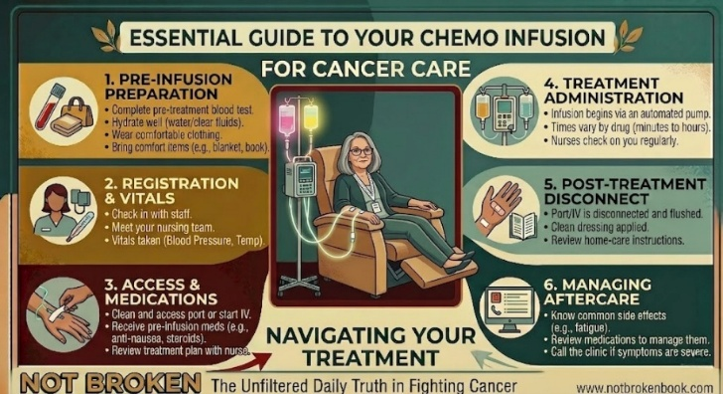
What a depressing place. I wish they would do something to make the infusion centers easier to emotionally handle. I understand that they are clinical settings with nurses and IV poles everywhere, but the aesthetics can be approved on. It is emotionally hard to even walk in there.

There are folks there in all different levels of illness. Some are in remission and there for their port flush. For these patients, the infusion centers bring back horrible memories, like PTSD level trauma. The extreme patients who are in the midst of lifesaving or life-extending treatments look like it may be their time at any moment. They look withdrawn and scared. Most people are in the middle, like you are.

You may have a slightly different experience than mine. This seemed pretty standard based on my experiences. There were many treatments and I was there a lot.

What to Expect:

1. PRE-INFUSION PREPARATION

· Hydrate well (water/clear fluids) before you arrive.

· Wear comfortable clothes. Wear a low cut or easy access shirt for the nurses to reach your port. There are no medical gowns.

· Bring comfort items, something to do. (e.g., blanket, book). Plan to be there for a while.

o Bring a fully charged phone to scroll and put it on silent. Don’t make or accept calls as that is very disturbing for the other patients.

2. REGISTRATION & VITALS

· Check in with staff.

· Meet your nurse. They rotate nurses so you don’t usually get the same nurse every time.

· Vitals taken (Blood Pressure, Temp).

· You will have a pre-treatment blood test and for me, I had a urine test too.

· Wait for those results and then for the chemo to arrive.

3. ACCESS & MEDICATIONS

· The nurse will clean and access your port or start an IV.

· Receive pre-infusion meds (e.g., anti-nausea, steroids).

· Review treatment plan with nurse. (After a few times, they tend to skip this part)

4. TREATMENT ADMINISTRATION

· Infusion begins via an automated pump.

· Times vary by drug (minutes to hours).

· Nurses check on you regularly. If you feel anything that seems off, get the nurse immediately. I had an allergic reaction to Oxaliplatin, after weeks of getting it without incident. That was a chaotic mess.

· It’s OK to sleep.

5. POST-TREATMENT DISCONNECT

· Port/IV is disconnected and flushed. Mine was flushed with saline and then Heparin, which has a brief metallic taste for me but not for everyone.

· Clean dressing applied.

· Review home-care instructions. (After a few times, they tend to skip this part)

6. MANAGING AFTERCARE

· Know what the common side effects are so that you can be prepared. (e.g., extreme fatigue).

· Call the doctor if your side effect symptoms are severe. When in doubt, call your doctor.


If this article was helpful, my book, NOT BROKEN The Unfiltered Daily Truth in Fighting Cancer goes deeper into the day-to-day realities of cancer—honestly, practically, and without filters.

Read More Here → www.Amazon.com/dp/B0GT2G4S3D