
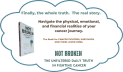
14 Frequently Asked Questions (FAQs)
NOT BROKEN The Unfiltered Daily Truth in Fighting Cancer
1. Is this book a medical guide?
No. This book is a personal, lived experience of fighting cancer. While it includes real treatments, side effects, and medical terms, it is not medical advice. The stories are based on the journey of me, Diane LaFaso Skullr. Every cancer journey is different, and readers should always consult their own doctors regarding diagnosis, treatment, or care decisions.
2. What type of cancer is this book about?
This book follows my journey with Stage 4 colon cancer, including metastasis to the lungs and lymph nodes, and the long road through chemotherapy, radiation, surgeries, remission, and recurrence. I discuss not only the medical road but also the emotional and financial difficulties.
3. Who is this book written for?
This book is for:
People diagnosed with cancer
Cancer survivors and those in remission
Caregivers, family members, and friends
Anyone trying to understand what living with cancer actually feels like
Even if you’ve never had cancer, this book offers insight into the emotional, physical, and financial realities patients face.
4. What does “What I Did Say” vs. “What I Didn’t Say” mean?
“What I Did Say” comes directly from my CaringBridge journal—the version of my story I felt safe sharing publicly at the time.
“What I Didn’t Say” is the raw, unfiltered truth—the fear, anger, shame, confusion, and thoughts I was too scared or exhausted to share publicly. It’s everything that I thought no one wanted or needed to know. I now understand now that maybe they did.
Together, they tell the full story.

5. Is this book depressing?
It is honest, and honesty can be heavy—but it is also filled with hope, grit, humor, faith, and survival. This is not a motivational slogan book. It is real life. Many readers say they feel seen, understood, and less alone after reading it.
6. Does the book have a happy ending?
The book ends with remission, not certainty. Remission is not a cure. Cancer is unpredictable, and this story respects that reality. The ending is honest, hopeful, and focused on living—despite the uncertainty.
7. Does the author share details about treatment side effects?
Yes. This book goes into real detail about chemotherapy, radiation, surgeries, ports, scans, fatigue, brain fog, neuropathy, financial strain, and emotional tolls. All the things’ patients often experience but we rarely hear discussed openly.
8. Is faith a major theme in the book?
Faith is part of my journey, but this is not a religious book. Faith appears naturally where it existed in my life, alongside fear, doubt, anger, resilience, and self-advocacy.
9. Does the book discuss mental and emotional health?
Yes—extensively. Topics include:
Fear of recurrence (scanxiety)
Depression and anxiety
Loss of identity
Isolation
Financial stress
Working while sick
The emotional cost of survival
These are often overlooked parts of cancer care, and this book gives them a voice. Told though my eyes and my lived experience.
10. Are difficult topics discussed?
Yes. This book contains discussions of:
Cancer diagnosis and progression
Medical procedures and side effects
Emotional distress and fear of death
Financial hardship
Employment challenges during illness
Readers looking for a sanitized version of cancer may find this book challenging—but many find it deeply validating. This is a tell-all of my journey.
11. Why write this book?
I wrote this book so that no one has to feel as alone and uninformed as I did. Cancer is not just a diagnosis. It’s a life-altering experience that affects every part of you. If this book helps even one person feel understood or stronger, then telling my story was worth it.
12. Does reading this book mean my experience will be the same?
Absolutely not. Cancer journeys vary widely. This book reflects my experience, not a universal roadmap. Treatments evolve, and individual reactions differ. Always rely on your own medical team for guidance. Talk to your oncologist and your 2nd opinion doctor as often as you need to.
13. Where can I find additional support or resources?
The book includes a Resources and Support section with organizations, communities, and tools for patients and caregivers. When you research, you will find resources specific to your needs, emotional, spiritual, medical and financial. Many readers also find online support groups and patient communities to be helpful.
14. What is the main message of this book?
You may be scared, exhausted, frightened, or changed—but you are not broken.
NOT BROKEN The Unfiltered Daily Truth in Fighting Cancer
by Diane La Faso Skullr
notbrokenbook.com
Available online on Amazon, Barnes & Noble, Walmart and other online book sellers.
